Why Carbon4Minerals Matters for Industrial Decarbonisation
Decarbonising energy-intensive industries requires solutions that go beyond the use of renewable energy. In many process industries, a significant share of CO₂ emissions is linked directly to industrial processes, making them difficult to avoid through cleaner energy alone.
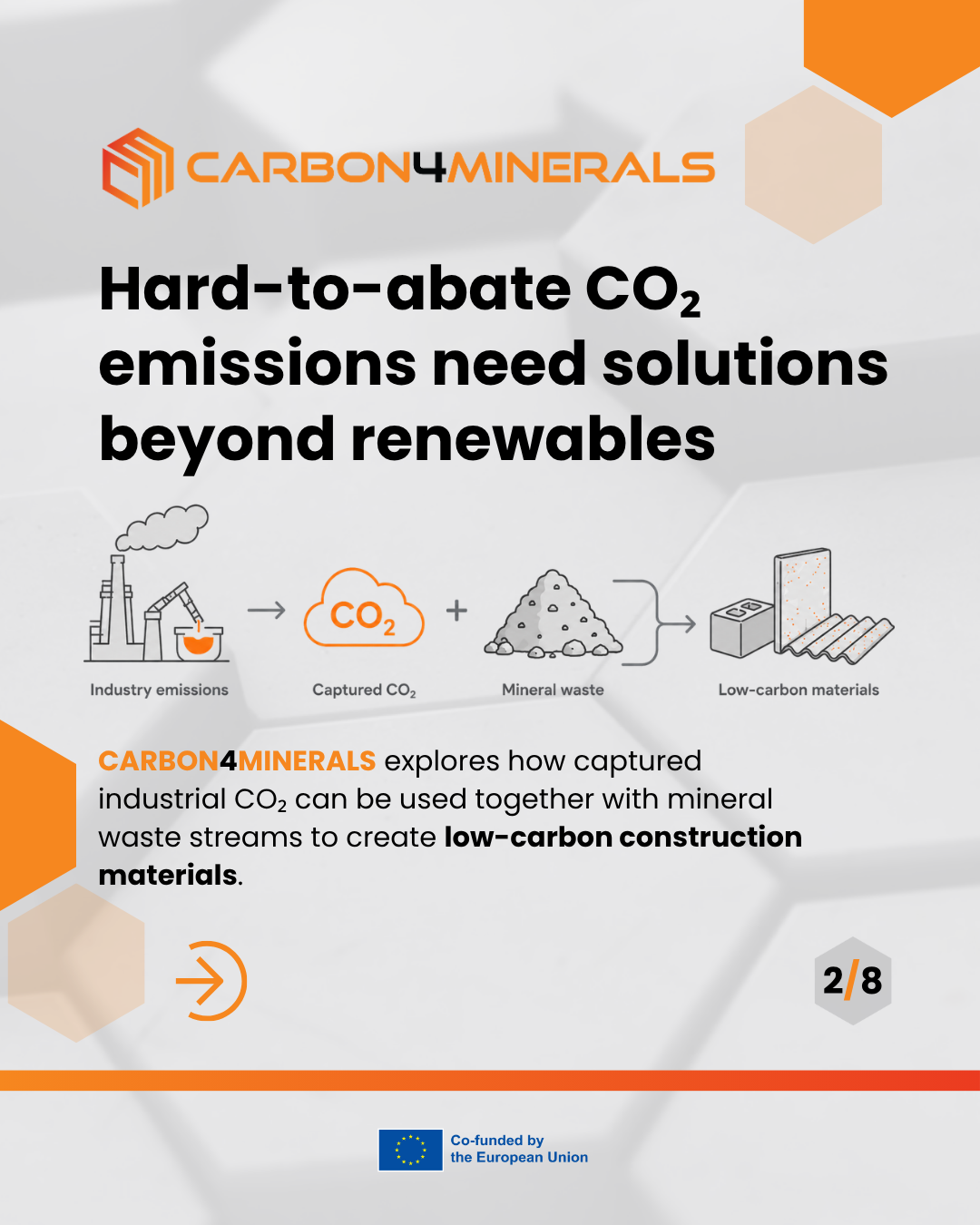
The Carbon4Minerals project addresses this challenge by exploring how captured industrial CO₂ can be used together with mineral waste streams to create low-carbon construction materials. Instead of treating CO₂ only as a waste stream, the project investigates how it can be captured, processed and recycled into new material applications.
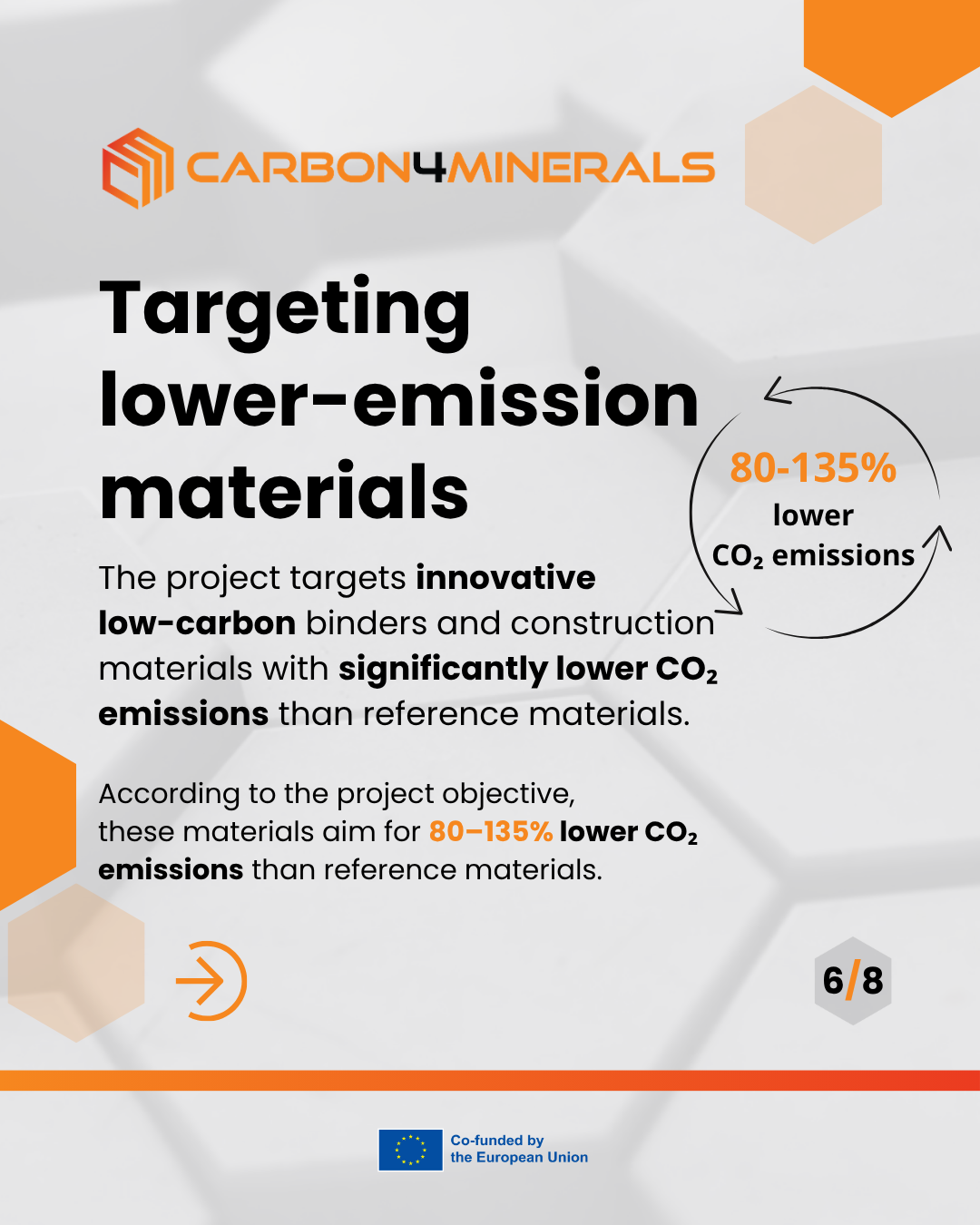
This approach is especially relevant as the transition in steel and energy production is reducing the availability of traditional low-carbon resources for cement production, such as blast furnace slag and coal fly ash. Carbon4Minerals responds by combining CO₂ from industrial flue gases with current and future waste streams to unlock new resources for low-carbon binders and construction materials.
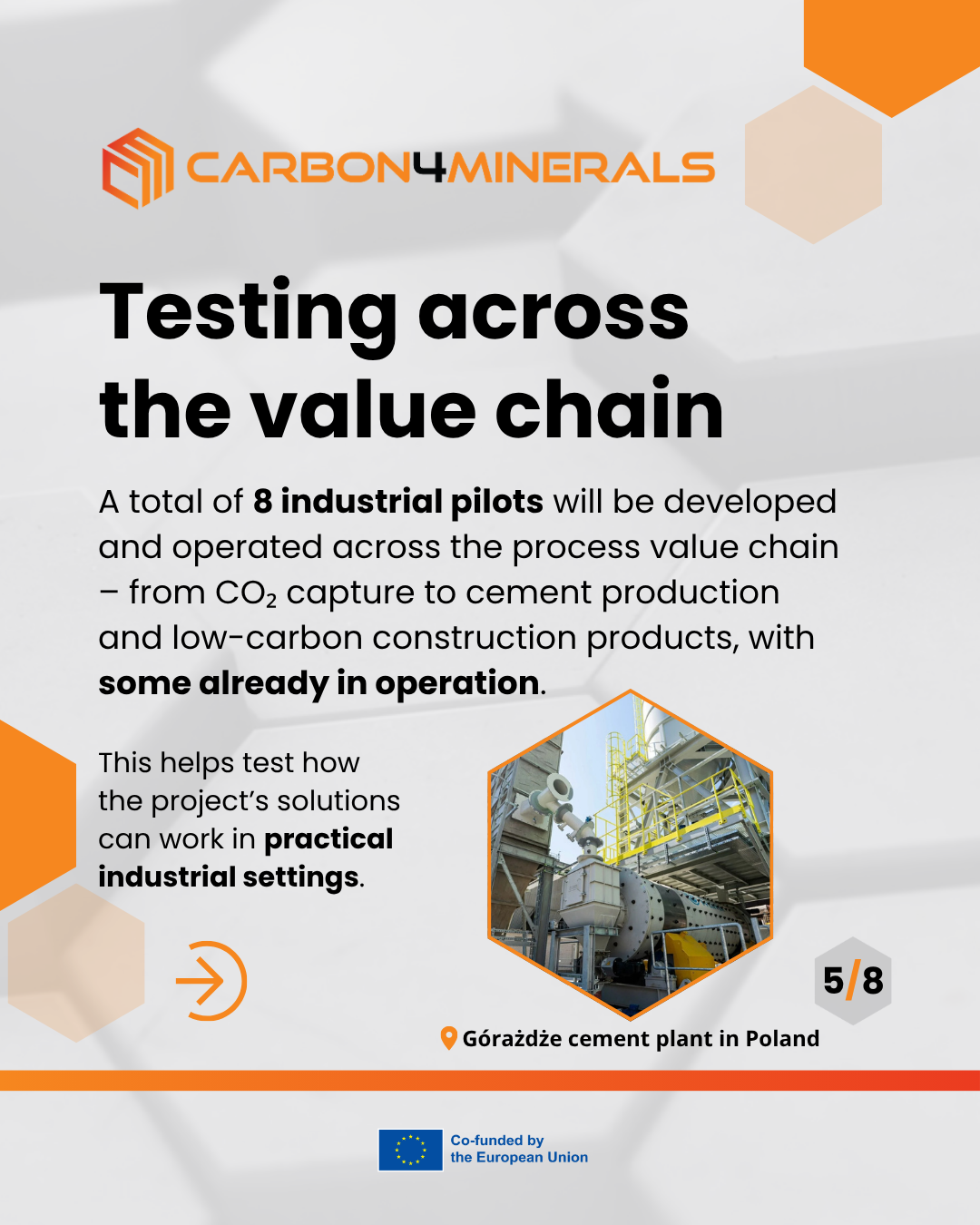
A total of 8 industrial pilots will be developed and operated across the process value chain, from CO₂ capture to cement production and low-carbon construction products, with some pilots already in operation. These pilots help test how the project’s solutions can work in practical industrial settings.
The project also focuses on validating technical, environmental and economic feasibility, as well as developing a service life test package tailored to the new construction products. By connecting CO₂ capture, mineral waste valorisation, low-carbon binders, construction products, integrated assessment and co-learning, Carbon4Minerals supports future industrial implementation and market introduction.
Through this integrated approach, the project contributes to Europe’s transition towards more circular, resource-efficient and lower-emission construction materials.